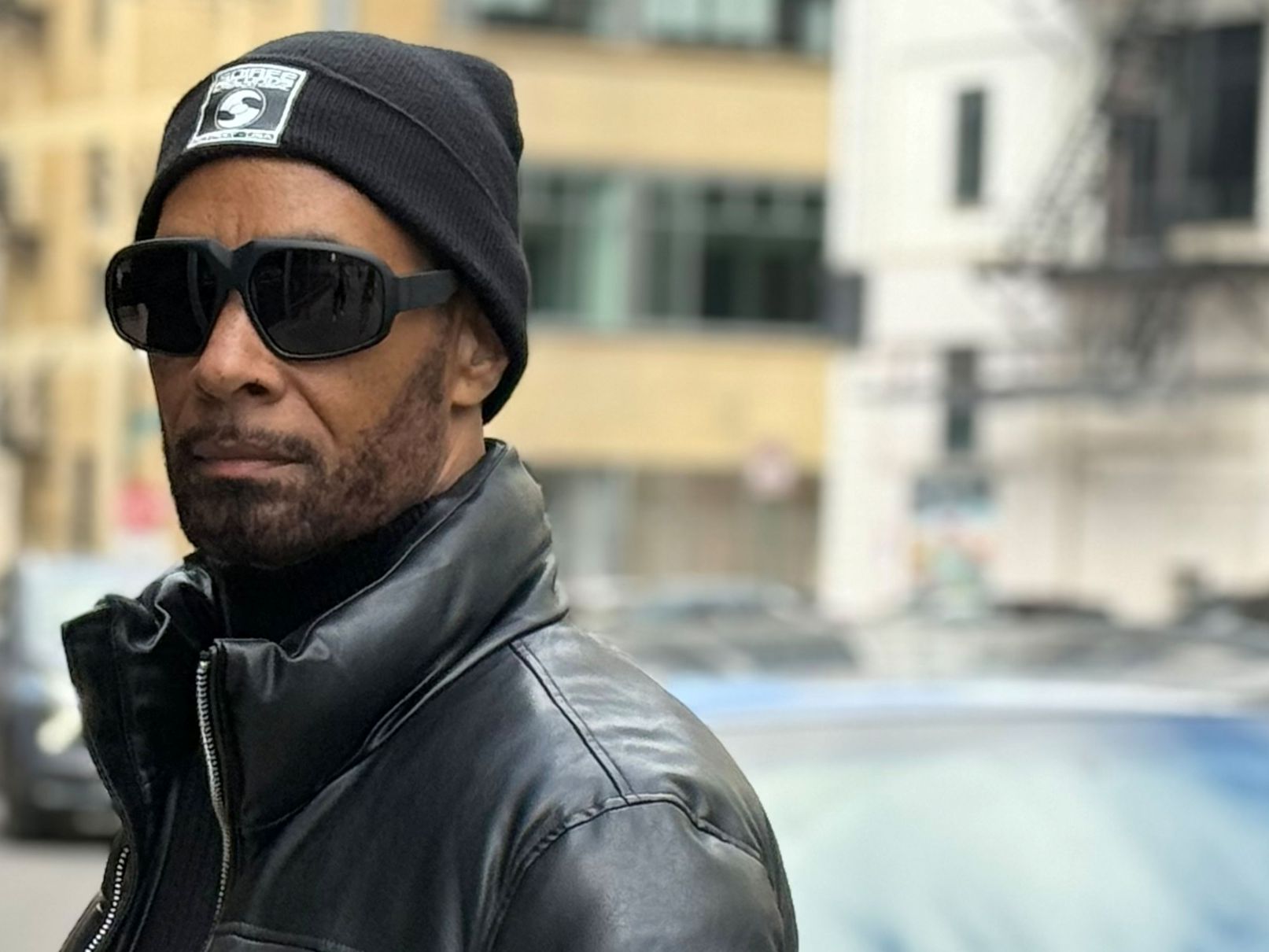
An interview with Derrick Thompson aka Drivetrain, one of the unsung heroes of Detroit’s underground music scene
Derrick Thompson is without a doubt one of the unsung heroes of Detroit’s underground scene, who has been an everpresent figure at the centre of the Motorcity’s tightly knit community since it first started making waves across the USA and beyond at the end of the 80s.
A contemporary of the likes of Mike Huckaby (RIP), Dj Minx, Delano Smith, Mike Clark, Norm Talley and Gary Martin. Over the years he’s released on labels such as Basic Energy, End Recordings, Plink Plonk, Moods & Grooves, Three to Five, Little Angel, Yore, Evolution, Katoku and of course his very own Soiree Records International amongst a host of others. As the figurehead and founder of the imprint, it is still going strong well over 3 decades later since which is a huge testament to both his passion and drive.
Over the years, Derrick has played host and given a launchpad to fellow local artists such as Scott Grooves, Dwayne Jense, Jerry The Cat, Cloudmasterweed over the years. As well as working with friends and underground music aficionados across different continents. Having put out a tight repertoire of quality, ground-breaking music from house and techno, to downtempo and experimental sounds. It’s also given him the place and space to release his own projects and gain traction with other major and independent imprints over the years.
As a DJ, Derrick has time and again entertained dance floors close to home playing at venues such as TV Lounge and MotorCity Wine, as well regularly travelling further afield to bring his dynamic, energetic mixing style and undeniably excellent track selection to respected clubs and venues. His continuing dedication and work ethic has quietly earned himself a level of respect which has kept himself focused on producing and presenting quality music that truly reflects his roots.
Having met on one of his recent visits to the UK for a series of gigs, we were keen to dive deeper into Derrick’s story and shine a light on an undeniably interesting artist and label who clearly shows no sign of letting up (House Music All Life Long).
What was it like growing up in Detroit when you were a kid?
I grew up in a middle class neighborhood. At the time the neighborhood was of mixed ethnicity. I had many friends and great childhood memories.
How were you introduced to music as a youngster?
I had an uncle who sang and played guitar. I was very young when I first saw him playing. I was thrilled by the guitar and watching him make music come out of it.
What sort of music was being played at home?
My dad loved classic and contemporary Jazz. He had a large record collection with a wide variety. My mom loved R&B and also had a record collection. So there was always music in our home and in family cars.
What inspired you to pick up and learn to play instruments?
Although I had been thrilled by the guitar at an early age, as I grew a little older, I took up playing drums. It looked like so much fun….banging on the skins. By the time I was a pre-teen, my older brother had bought a bass guitar. He rarely played it, so I picked it up. I played it constantly and got really good at it.
You ended up playing in bands, how did that come about?
When I was a teenager, some of my friends were also interested in playing instruments. Finally, we had enough people to form a band. We were sort of a Jazz, R&B band, I played bass guitar. But I was always the type of person who could not be content with doing just one thing though.
And where did it take you…
My musical interests started to broaden out to other genres. I’d always been drawn to rock music. After playing in my first band, I became very curious about playing rock guitar. So I bought my first Fender Stratocaster, learned to play it and began jamming with rock bands.
At what point did you start to hear Electronic music?
My older brother was DJ’ing in clubs around the city. They were playing music they were calling “Progressive” at the time, which also included early electro.
A lot of Detroit artists cite The Electrifying Mojo as a big influence – was this the case for you?
The Electrifying Mojo was also a huge influence on me. He pushed the boundaries with the music he played, by not only playing rock and new wave music, but also local Detroit electronic music. This exposed me to a lot of music that I would not have otherwise heard.
How did you first get introduced to House music?
When I was still a teenager, I went to clubs with my older brother. I was too young to get in, but somehow I always managed to find a way. The clubs were playing electronic music. I loved the vibe and I was hooked.
And when did you first start being able to go to parties?
That’s a difficult question to answer. I think I probably started going to parties when I was 16 years old. But legally, I shouldn’t have been there!

Where did you end up going to regularly to experience the music?
During those years, I frequented places in Detroit like The Music Institute, Cheeks, Todd’s, etc.
Which local artists/djs made a big impression on you at that time?
It would have to be The Wizard (Jeff Mills) as he was on the radio. I loved his music selection and mixing style.
What was the most important record shop to buy music from at that point in time?
There was a shop on the west side of Detroit called Buy Rite Records. It was THE place to buy underground electronic music. They had a large selection of domestic and imported records. There were also a few other shops at the time. Later ,a shop on the east side called Record Time became a huge staple too.
At what point did you get into DJing?
By the time my brother stopped, I’d taken an interest in the art. I began playing at house (basement) parties and other private affairs.
How did it evolve into you wanting to produce music?
After playing in several bands, and experiencing creative and personality differences, I was particularly interested in the concept of creating songs (tracks) from start to finish, all on my own. As my love for electronic music grew, this was the clear path.
When did you realize that you needed to set up a studio?
While I was playing in bands, I’d already accumulated some keyboards, a drum machine, a Korg sequencer, a mixing console, etc. All I needed was a means of recording and I could start making my own tracks.
What equipment did you put together to start learning with?
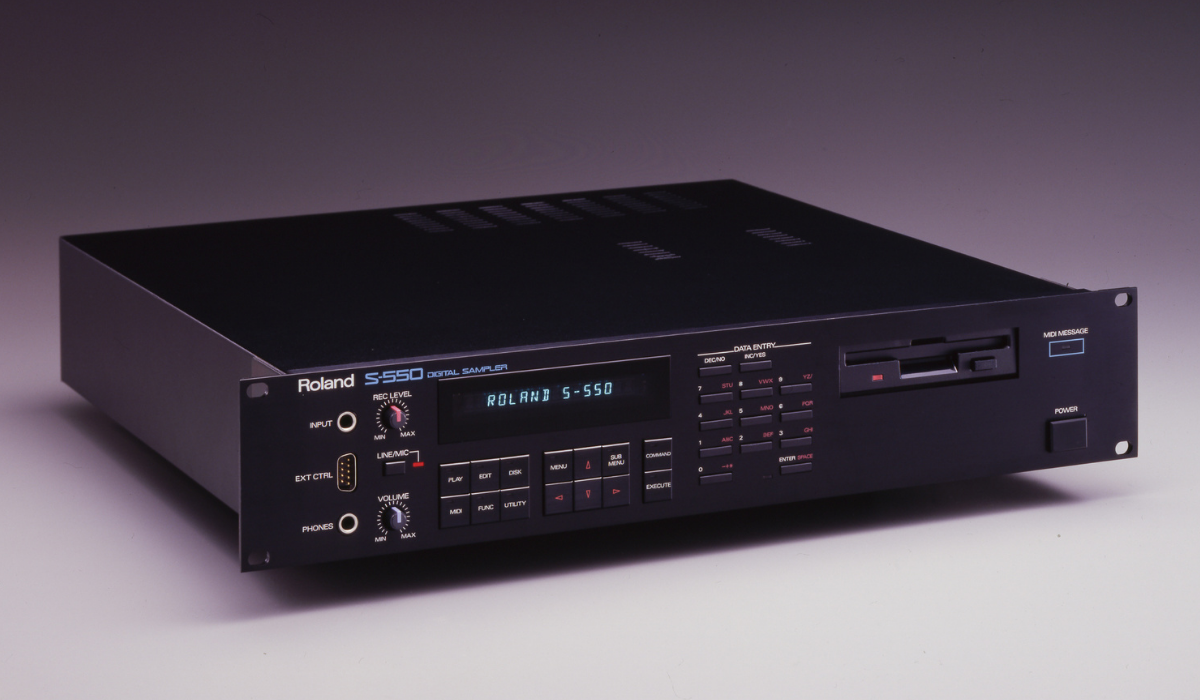
My studio recording career began with a Roland S550 sampler/sequencer as the nucleus. Having used the Korg sequencer previously, this newer technology had so much more to offer and I learned it inside and out. I also bought a DAT recorder so I was pretty much ready to go.
Which artists were you listening to when you first started making music then?
I was listening to local artists like Inner City, I listened to a lot of “Hip-House” tracks and a lot of techno imports from labels like R&S, Tresor, etc.
How long did it take you to realize that releasing music yourself was the way forward?
Having already been exposed to recording in large studios with some of the bands I’d played with, I had that dream of getting my music exposed to a wider audience… like the entire world. Now that I had the means to record my own music, naturally the next step would be to have it released, either by another label or on my own.
And how did you go about getting records pressed up and distributed?
There is a local pressing plant in Detroit called Archer Record Pressing. The local labels were pressing there, so I took that route as well. There were a couple of local distributors I did business with, but I knew that I needed to go beyond Detroit. So, I pursued the New York and Chicago companies that were distributing House and Techno music. I also distributed to several record pools for more exposure.
Listening back, how do you feel about those early releases now?
I’ve learned a lot from the whole experience. Music evolves. Those early releases were where my musical journey had taken me to at that point. I have no regrets. I see it more as early chapters of my legacy.
With Techno becoming so prevalent in putting Detroit on the map – what made you stick to House?
Actually, I didn’t just stick to House…
By the 5th record, I was releasing techno. It has remained that way down to this day. You’ll find that Soiree Records has a pretty even mix of House and Techno with some down-tempo, Electro, Drum & Bass and some more Experimental music thrown in.
Which of your early releases really made you realize things were on the up?
By the 7th release, “Lockstep EP” (SRT107), I realized that the label was legit and respected. That record has sold more vinyl copies than any other, down to this day.
How did you make the transition to playing outside of the USA?
I had been contacted by a guy in London who was really interested in music from Detroit. He had assisted Detroit labels and artists with international distribution and bookings. He invited me to London for a visit. On that visit I made loads of contacts and my overseas career followed from there. As my exposure in London grew, playing at venues like “The End” and “Ultimate Bass.” The following year I was contacted by promoters in France, and the year after that I started playing in Germany.
Any crazy or memorable experiences/stories you care to share with us…
Yes…there are tons. I think my best answer to that question would be, “buy the book.” (LOL). I will say that I really enjoyed playing the “Love Parade” in Berlin. Riding on the truck and playing in front of potentially a million people was truly breathtaking.
How did you start working with The End and Plink Plonk?
I honestly don’t remember how I met Richard West/Mr. C. I do remember that when we met, we seemed to hit it off right away. We went out for coffee, talked shop and before I knew it I was recording for his label and regularly playing at The End. At the time, he and Paul Rip were close. Paul Rip ran the label Plink Plonk. I think Richard may have introduced me to Paul as they were working together. I think they also recorded at the same studio. Paul and I became very close and I began recording for Plink Plonk. To this day, both of those guys are good friends of mine.
And when did you first link with Andy Vaz?
Andy has always been a big supporter of the Detroit underground community. So, he was very familiar with my label. I play in his hometown of Cologne quite often. I think he came to one of my gigs and that’s how we met in person. From that time, Andy and I have played several gigs together. I’ve released an EP on his label, Yore Records. He has released an EP on my label, maybe 20 years ago (wow! time flies!). So the new release will be his second on Soiree Records.
How do think your label catalogue stands up?
As mentioned, the ‘Lockstep EP’ really put the label up and out there on a global scale. The follow-up release, ‘Symphonium EP’ solidified that the label was no fluke and we were here to stay. Laurent Garnier charted a track from that EP called ‘Soundtrack’ and it instantly blew up. We’ve had many well known Detroit artists release material on the label. For instance Jerry The Cat ‘Mating Ritual Remixes’ features reworks by Theo Parrish and DJ Minx. The first release by Andy Vaz, SRT152 features a remix by Norm Tally. Scott Grooves had several early releases under the names ‘Key Statements’ and ‘DJ Scott’. Another milestone was my release ‘Deep Animation’. It featured a ground-breaking track for that time called, “Acid Ensemble.” Tony Humphries was seen holding a green vinyl copy of the release on the cover of DJ Times magazine at the time.
How did you start working with Scott Grooves, Dwayne Jensen, and Jason Garcia (more recently)?
Our underground community is pretty tight. Soiree Records features more than 100 artists from around the world. But being a Detroiter, my ear is always to the ground here at home.
What does Detroit look like in terms of emerging talent these days?
The future looks incredibly bright for Detroit talent. There are many uniquely talented up-and-coming artists yet to be discovered in Detroit. They are taking what we’ve built into uncharted territories. That’s the beauty of the music we make -there’s no boundaries.
Where are the go to spots for underground house and techno in Detroit these days?
I’m happy to say that there are many options today. Some clubs that consistently bring in talent are TV Lounge, Marble Bar, Spot Lite, SpkrBox and a few more. There are frequent one-off parties as well.
In terms of music and the scene evolving, what do you feel positive about?
I think that the scene is still recovering from COVID. People are going out again (maybe not quite as they were pre-covid). Music lovers have been opened to many more options of listening to their favorite music and DJs via streaming services. It certainly gives artists and dj’s the possibility of greater exposure. Of course the downside is that there is so much competition. The challenge is breaking through all of the noise. This is also true of those creating music and trying to be heard. Sure you can start a Bandcamp page. But again, a good promotional strategy has to be implemented to get the music is exposed. With all of that, I don’t see the well running dry as far as creativity. Technology and creative minds will continue to thrust the music into an unimagined future…